Her lecture 'Craftsmanship', part of a BBC radio broadcast from April 29, 1937.
'Words do not live in dictionaries, they live in the mind.' - Virginia Woolf
Showing posts with label books. Show all posts
Showing posts with label books. Show all posts
Tuesday, April 03, 2012


Friday, December 16, 2011
Australian Women Writers Challenge 2012
This is a challenge born of something approaching despair.
Last year, VIDA in the US released its survey of publishing data which showed exactly what anyone with half a brain already knew: dire levels of representation of women at all levels; the number of books by women that got reviewed, the number of female reviewers and book page editors, and women in senior positions in the industry.
Throughout 2011, more and more incidents came to prominence (as if inequality was a new thing!) including the lack of women writers on a number of key literary prize judging panels and shortlists.
My personal favourite moment was when Jennifer Egan won the Pulitzer, and the LA Times reported instead that Jonathan Franzen had lost the Pulitzer, and ran his photo on the front page - not the winner's. Laugh? I nearly...
Of course, this is not unique to writing and publishing. Like nursing, librarianship and education, it's a field in which the majority (which happens to be female) are dominated by a minority, with males traditionally taking positions in management in publishing, libraries, writing courses, festivals and writers' centres (although the normally rowdy community is often strangely silent on those last two categories, I notice).
That's not to diminish the many amazing women in positions of power in the writing world. It's just a thing.

But unlike those fields, something unique and profound is also afoot, because the issue is also about how literary worth is assessed: which issues, what settings, language, topics and characters make up the sort of books that win prizes. It's about our culture.
I won't bang on about it: others have already done so very eloquently, and anyway it seems like the kind of no-brainer thing most of us have been saying since 1975. Or since we could speak.
But what to do?
Short of coming over all Emma Goldman (and don't tempt me), here's one wee thing we can all do, no matter what our gender: make 2012 the year you read a few good books written by Australian women.
The challenge has been issued. It runs as follows:
Goal: Read and review books written by Australian women writers – hard copies, ebooks and audiobooks, new, borrowed or stumbled upon.
Genre challenges:
Challenge levels:
You can read more about it here.
My response?
I'm going to undertake the devoted eclectic challenge (of course, because that's how we roll here, at the best of times), and at least the Miles level.
I'm not sure of all the books I'll read yet, because there are some beauties coming out, but the first few are:

Last year, VIDA in the US released its survey of publishing data which showed exactly what anyone with half a brain already knew: dire levels of representation of women at all levels; the number of books by women that got reviewed, the number of female reviewers and book page editors, and women in senior positions in the industry.
Throughout 2011, more and more incidents came to prominence (as if inequality was a new thing!) including the lack of women writers on a number of key literary prize judging panels and shortlists.
My personal favourite moment was when Jennifer Egan won the Pulitzer, and the LA Times reported instead that Jonathan Franzen had lost the Pulitzer, and ran his photo on the front page - not the winner's. Laugh? I nearly...
Of course, this is not unique to writing and publishing. Like nursing, librarianship and education, it's a field in which the majority (which happens to be female) are dominated by a minority, with males traditionally taking positions in management in publishing, libraries, writing courses, festivals and writers' centres (although the normally rowdy community is often strangely silent on those last two categories, I notice).
That's not to diminish the many amazing women in positions of power in the writing world. It's just a thing.

But unlike those fields, something unique and profound is also afoot, because the issue is also about how literary worth is assessed: which issues, what settings, language, topics and characters make up the sort of books that win prizes. It's about our culture.
I won't bang on about it: others have already done so very eloquently, and anyway it seems like the kind of no-brainer thing most of us have been saying since 1975. Or since we could speak.
But what to do?
Short of coming over all Emma Goldman (and don't tempt me), here's one wee thing we can all do, no matter what our gender: make 2012 the year you read a few good books written by Australian women.
The challenge has been issued. It runs as follows:
Goal: Read and review books written by Australian women writers – hard copies, ebooks and audiobooks, new, borrowed or stumbled upon.
Genre challenges:
- Purist: one genre only
- Dabbler: more than one genre
- Devoted eclectic: as many genres as you can find
Challenge levels:
- Stella (read 3 and review at least 2 books)
- Miles (read 6 and review at least 3
- Franklin-fantastic (read 10 and review at least 4 books)
You can read more about it here.
My response?
I'm going to undertake the devoted eclectic challenge (of course, because that's how we roll here, at the best of times), and at least the Miles level.
I'm not sure of all the books I'll read yet, because there are some beauties coming out, but the first few are:
Sensational Melbourne: Reading, Sensation Fiction and Lady Audley's Secret in the Victorian Metropolis, by Susan Martin and Kylie Mirmohamadi
Playing with Water: A Story of a Garden, by Kate Llewellyn
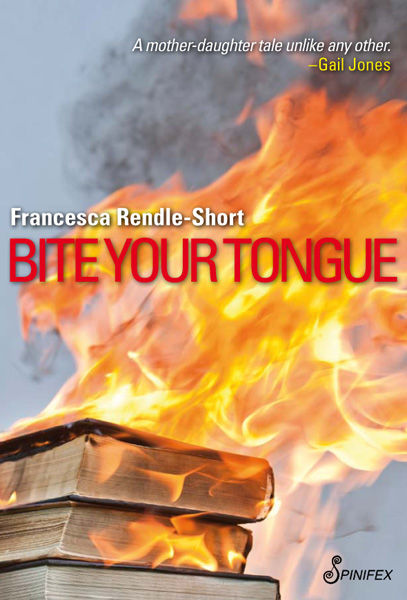
Bite Your Tongue, by Francesca Rendle-Short
And no doubt I'll read some YA titles, including the forthcoming:
- Queen of the Night, by Leanne Hall
- The Howling Boy, by Cath Crowley
- Pulchritude (or whatever it ends up being called) by Fiona Wood.
Tuesday, December 13, 2011
Happily ever after
On a recent school visit, the teachers asked me to talk a bit about book reviews. Good timing, because I've been thinking a lot lately about the way the reviewing world has changed with so many peer-to-peer recommendation sites and a gazillion book blogs.
I love book blogs: this started out as one, in a way, many years ago. There are reviewers on blogs who are so perceptive about books, they astonish me; some who write beautifully; others who may do so one day, or who write perfectly good thoughtful pieces; others who write as fans - especially in genre - and unashamedly so.
Good on 'em all, I say.
Sites such as Good Reads, Library Thing and inside a dog* make it possible for all of us to share our thoughts on books we've read as, increasingly, do online library catalogues and book stores.
There are dangers, sure, and the occasional scandal, but the more the merrier.
Communities of book lovers, talking about books. What could possibly go wrong?
Well, nothing much, really.
But there is one thing I've noticed over and over again in discussions about books on Good Reads and facebook and various blogs: people really hate it when the book doesn't turn out how they expect. It makes them furious.
They equate this with failure - the plot doesn't unfold the way they imagined therefore the book sucks. And they will often take it out on the author, either through reviews, or more directly in a chat or forum, in a tone that can make your hair curl right up and slide off your head.
I've never been in that position myself but I hate to think what it does to an author.
Let's take a famous example: the death of the beloved Dumbledore at the end of Harry Potter and the Half-Blood Prince.

The world was shocked. The death of "a major character" had been foreshadowed by JK Rowling prior to the book's release and it was even in all the media, but Dumbledore's death led to an outcry. Readers believed he wasn't really dead, and would reappear like Gandalf (of course he does, but he's still dead). As was usual in the Potterverse, complex theories were developed to explain it, dead or alive, and the discussion continues to this day.
But Rowling as the author was always quite clear, and why wouldn't she be? Apart from the fact that it's her book world and she can do whatever she likes, there were myriad plot twists wrapped around the death and, most critical, Harry's character development and quest (and Hermione's too) required it.
That's not how many fans saw it: they saw it as a betrayal, as a failure of the logic they had established for themselves, as a mistake.
They have invested so much in the story - what a wonderful thing! But what else is going on there? We all love to have a theory about what will happen next. Part of the fun of online discussion of books, film and TV is that very element.
I reckon part of it, too, is the expectation that there will be happy endings. That there will be romance, and everyone will live happily ever after.
Sometimes that does happen. In life, and in art. But other things happen too - people disconnect from one another accidentally, or never connect; they argue about stupid things; they annoy you; they get scared when they should be brave; they falter and bicker and fall out of love and die.
I remember well the shriek that went around the cinema when I was a kid watching Doctor Zhivago at the Anglesea Luxury Cinema and Lara DIDN'T TURN AROUND AND OMAR SHARIF WAS RUNNING AND THEN HE CLUTCHED HIS CHEST AND OH MY GOD AND SHE NEVER KNEW!
I nearly spat my Marella Jube into the hair of the person in front.

So if you feel betrayed by an author or a film-maker when that happens in your favourite book or series, don't take it out on them or the work they've created.
What it means is that they have created a world so engaging that we, as readers, are lost in it. We are annoyed because the author wants us to be annoyed, upset because that person we loved is gone and we just don't know what will happen next.
And that's a good thing. Right?
*Disclosure: I work with inside a dog as part of my day job, but these comments are my own.
I love book blogs: this started out as one, in a way, many years ago. There are reviewers on blogs who are so perceptive about books, they astonish me; some who write beautifully; others who may do so one day, or who write perfectly good thoughtful pieces; others who write as fans - especially in genre - and unashamedly so.
Good on 'em all, I say.
Sites such as Good Reads, Library Thing and inside a dog* make it possible for all of us to share our thoughts on books we've read as, increasingly, do online library catalogues and book stores.
There are dangers, sure, and the occasional scandal, but the more the merrier.
Communities of book lovers, talking about books. What could possibly go wrong?
Well, nothing much, really.
But there is one thing I've noticed over and over again in discussions about books on Good Reads and facebook and various blogs: people really hate it when the book doesn't turn out how they expect. It makes them furious.
They equate this with failure - the plot doesn't unfold the way they imagined therefore the book sucks. And they will often take it out on the author, either through reviews, or more directly in a chat or forum, in a tone that can make your hair curl right up and slide off your head.
I've never been in that position myself but I hate to think what it does to an author.
Let's take a famous example: the death of the beloved Dumbledore at the end of Harry Potter and the Half-Blood Prince.

The world was shocked. The death of "a major character" had been foreshadowed by JK Rowling prior to the book's release and it was even in all the media, but Dumbledore's death led to an outcry. Readers believed he wasn't really dead, and would reappear like Gandalf (of course he does, but he's still dead). As was usual in the Potterverse, complex theories were developed to explain it, dead or alive, and the discussion continues to this day.
But Rowling as the author was always quite clear, and why wouldn't she be? Apart from the fact that it's her book world and she can do whatever she likes, there were myriad plot twists wrapped around the death and, most critical, Harry's character development and quest (and Hermione's too) required it.
That's not how many fans saw it: they saw it as a betrayal, as a failure of the logic they had established for themselves, as a mistake.
They have invested so much in the story - what a wonderful thing! But what else is going on there? We all love to have a theory about what will happen next. Part of the fun of online discussion of books, film and TV is that very element.
I reckon part of it, too, is the expectation that there will be happy endings. That there will be romance, and everyone will live happily ever after.
Sometimes that does happen. In life, and in art. But other things happen too - people disconnect from one another accidentally, or never connect; they argue about stupid things; they annoy you; they get scared when they should be brave; they falter and bicker and fall out of love and die.
I remember well the shriek that went around the cinema when I was a kid watching Doctor Zhivago at the Anglesea Luxury Cinema and Lara DIDN'T TURN AROUND AND OMAR SHARIF WAS RUNNING AND THEN HE CLUTCHED HIS CHEST AND OH MY GOD AND SHE NEVER KNEW!
I nearly spat my Marella Jube into the hair of the person in front.

So if you feel betrayed by an author or a film-maker when that happens in your favourite book or series, don't take it out on them or the work they've created.
What it means is that they have created a world so engaging that we, as readers, are lost in it. We are annoyed because the author wants us to be annoyed, upset because that person we loved is gone and we just don't know what will happen next.
And that's a good thing. Right?
*Disclosure: I work with inside a dog as part of my day job, but these comments are my own.
Subscribe to:
Posts (Atom)