I've integrated my blog into my website, and will post there from now on.
Read my updates on kellygardiner.com.
It includes the archived posts from this blog, but this blog will not be updated.
Sunday, April 08, 2012


Tuesday, April 03, 2012
Notable - is that the same as infamous?
Delightful news today that Act of Faith has been listed as one of the Notable Books for Older Readers for 2012 by the Children's Book Council of Australia.
There are some fine books on the list, including Penni Russon's superb Only Ever Always and Vicki Wakefield's All I Ever Wanted, so I'm extremely honoured. You can read the whole list and the shortlist for Book of the Year here.
There are some fine books on the list, including Penni Russon's superb Only Ever Always and Vicki Wakefield's All I Ever Wanted, so I'm extremely honoured. You can read the whole list and the shortlist for Book of the Year here.
Virginia Woolf - in her own words
Her lecture 'Craftsmanship', part of a BBC radio broadcast from April 29, 1937.
'Words do not live in dictionaries, they live in the mind.' - Virginia Woolf
'Words do not live in dictionaries, they live in the mind.' - Virginia Woolf
Monday, April 02, 2012
Vita Sackville-West - in her own voice
Reading passages from The Land, recorded by Columbia in 1931 for the International Education Society.
I find these sorts of thing enormously moving: hearing the voices of long-gone people I've heard in my head for years.
I find these sorts of thing enormously moving: hearing the voices of long-gone people I've heard in my head for years.
Friday, March 30, 2012
Tudor plagues
What's the collective noun for the Tudors? A chalice of Tudors? A gauntlet?
A plague?
There are, at last count, 27,491* historical novels based in the courts of the Tudor kings and queens. It's not hard to see why. They were a fascinating lot. Sex maniac Henry. His six wives and their sisters. His children: irrational and frigid or possibly sex maniac Elizabeth, psychopathic Mary, frail little Edward and his cousin the bewildered Lady Jane Grey. There are captains with sparkling eyes like Burt Lancaster in The Crimson Pirate. Priests in hair shirts. Head chopping. Rabid Scots. An Armada. There is even Geoffrey Rush. That's what they were like, right? Ask anybody.
It's time to enforce a moratorium.
From now on, nobody is allowed to publish any new books on the Tudors without proving to a committee (composed entirely of me) that they:
We get the some thing over and over. That's right. Elizabeth never married. I don't understand how that comes as a surprise to anybody. Mary, Queen of Scots was executed. So was Anne Boleyn. Henry had six wives. Amazing. Who knew?
But what you would never learn from many of the recent fictional portrayals is that these were among the best educated, most intelligent, influential people in Europe. That some of the most significant political and religious initiatives of all time took place under their reigns (alongside some disasters). That the Tudor queens dramatically altered the understanding of monarchy and leadership. That some of the alliances the Tudors forged and enemies they created resonate to this day.
Instead you can read about an Elizabeth who clings to her lover Dudley's manly chest while he makes the decisions, like Fabio on a Mills & Boon cover - or was that Essex - or perhaps Walter Raleigh?; about a fey Jane Grey or poor wee sickly Edward; about Mary who lived only to burn people and stalk the hallways like Mrs Rochester; and about a Henry who jumps from bed to bed without ever pausing to ponder economics or military matters or foreign affairs.
Now don't get me wrong. I'm very happy to see new interpretations that cast light on some of these people and those around them. I even think Jonathan Rhys Meyers never ageing as Henry is hilarious - although I can't quite bring myself to keep watching The Tudors. I don't mind the odd mash up (such as - a slightly different example - Sofia Coppola's stylish take on Marie Antoinette, another historical object of mass obsession).
What I hate is the same drivel over and over, poorly written books that only sell because they are about the Tudors, or work that utterly distorts readers' historical understanding for no good reason. So much of it is little more than fan fiction and bad fan fiction at that. They make me shout and scoff and snort, and that's not what you want from a reading experience. I refuse to read another one unless a jury of my peers assures me it's readable.
And as a result, we now have an entire generation of readers who think that one of the great dynasties of British history is just that: Dynasty without Joan Collins (and even she once played Bess Throckmorton).
Those readers now have a historical framework which includes the belief that Elizabeth had Mary of Guise either poisoned or killed by Walsingham's own hand (she died of dropsy), or that she had Bishop Gardiner murdered for opposing her (he died of natural causes well before she took the throne). Minor examples, but symbolic distortions. And why?
Sometimes historical fiction needs to bend the laws of time or truth and the responsible novelist will make sure readers understand this in an appropriate note at the end. Film-makers do the same. Elizabeth and Mary, Queen of Scots never met, but who could forget Vanessa Redgrave as Mary, Queen of Scots sparring with Glenda Jackson's Elizabeth? Katherine Hepburn as Mary also met Florence Eldridge as Elizabeth in 1936. Barbara Flynn as Mary and Helen Mirren's inevitable Elizabeth locked horns just a few years ago.
It's a gorgeous idea, if only for the casting - but always promoted as such. It's a 'what if?' fiction. That's different to swapping historical figures in and out of time or place or even marriages apparently at random.
But I fail to understand why, in your bog standard Tudor narrative, with real historical figures so wondrous, so entertaining, operating in a complex and sophisticated world, almost everybody feels they have to make anything up or add extra intrigue.
We also now have an entire Tudors industry, devoted to churning out trade paperbacks with sumptuous covers of women or girls in gowns but with no heads - which is, in a way, appropriate. (Hmm. Now I think about it, maybe all those headless historical fiction covers are subliminal nods to Anne Boleyn?)
Like Marie Antoinette and Napoleon, the Tudors are fascinating. They have what is known in LA as timeless appeal. You don't have to do much with them, because the historical figures do a lot of the heavy narrative lifting themselves. And there are so many popular history books written about them, too, you don't even have to do any really hard research. Easy.
That's how so many of these books feel.
It's not enough.
I'm doing my PhD at present, and to be awarded a PhD you have to make "a unique contribution to human knowledge and understanding". That seems to me to be a very good guide for any book. Each novel, each short story, should be a unique contribution to human knowledge and understanding. It may not be major, earth-shattering, but it should at least be unique.
There have been revelations of new historical material and new perspectives on the Tudor years in the recent past. Most of this has appeared in the work of historians, archaeologists or other writers of non-fiction, but some has and will come from fiction; from novelists shining a torch into the dusty corners of the past. Mantel's Wolf Hall is a brilliant example.
Find a legitimate way in. Focus on a character previously neglected. Shed light on a particular moment. Make a unique contribution. I know someone who is writing a novel about Dudley's wife, Amy Robsart, and I feel sure it will offer unique insights, a different perspective and is impeccably researched. It will pass the committee appraisal with flying colours and satisfy both criteria.
To such authors I say, go forth and bring us as many fabulous new Tudor tales as you can imagine. More power to your arm.
Everyone else, step away from the keyboard.
*That's a historical distortion - in other words, I made it up.
A plague?
There are, at last count, 27,491* historical novels based in the courts of the Tudor kings and queens. It's not hard to see why. They were a fascinating lot. Sex maniac Henry. His six wives and their sisters. His children: irrational and frigid or possibly sex maniac Elizabeth, psychopathic Mary, frail little Edward and his cousin the bewildered Lady Jane Grey. There are captains with sparkling eyes like Burt Lancaster in The Crimson Pirate. Priests in hair shirts. Head chopping. Rabid Scots. An Armada. There is even Geoffrey Rush. That's what they were like, right? Ask anybody.
It's time to enforce a moratorium.
From now on, nobody is allowed to publish any new books on the Tudors without proving to a committee (composed entirely of me) that they:
- Undertake not to completely distort the historical record and their readers' sense of history without reasonable cause
- Have something new to say on the topic.
We get the some thing over and over. That's right. Elizabeth never married. I don't understand how that comes as a surprise to anybody. Mary, Queen of Scots was executed. So was Anne Boleyn. Henry had six wives. Amazing. Who knew?
But what you would never learn from many of the recent fictional portrayals is that these were among the best educated, most intelligent, influential people in Europe. That some of the most significant political and religious initiatives of all time took place under their reigns (alongside some disasters). That the Tudor queens dramatically altered the understanding of monarchy and leadership. That some of the alliances the Tudors forged and enemies they created resonate to this day.
Instead you can read about an Elizabeth who clings to her lover Dudley's manly chest while he makes the decisions, like Fabio on a Mills & Boon cover - or was that Essex - or perhaps Walter Raleigh?; about a fey Jane Grey or poor wee sickly Edward; about Mary who lived only to burn people and stalk the hallways like Mrs Rochester; and about a Henry who jumps from bed to bed without ever pausing to ponder economics or military matters or foreign affairs.
Now don't get me wrong. I'm very happy to see new interpretations that cast light on some of these people and those around them. I even think Jonathan Rhys Meyers never ageing as Henry is hilarious - although I can't quite bring myself to keep watching The Tudors. I don't mind the odd mash up (such as - a slightly different example - Sofia Coppola's stylish take on Marie Antoinette, another historical object of mass obsession).
What I hate is the same drivel over and over, poorly written books that only sell because they are about the Tudors, or work that utterly distorts readers' historical understanding for no good reason. So much of it is little more than fan fiction and bad fan fiction at that. They make me shout and scoff and snort, and that's not what you want from a reading experience. I refuse to read another one unless a jury of my peers assures me it's readable.
And as a result, we now have an entire generation of readers who think that one of the great dynasties of British history is just that: Dynasty without Joan Collins (and even she once played Bess Throckmorton).
Those readers now have a historical framework which includes the belief that Elizabeth had Mary of Guise either poisoned or killed by Walsingham's own hand (she died of dropsy), or that she had Bishop Gardiner murdered for opposing her (he died of natural causes well before she took the throne). Minor examples, but symbolic distortions. And why?
Sometimes historical fiction needs to bend the laws of time or truth and the responsible novelist will make sure readers understand this in an appropriate note at the end. Film-makers do the same. Elizabeth and Mary, Queen of Scots never met, but who could forget Vanessa Redgrave as Mary, Queen of Scots sparring with Glenda Jackson's Elizabeth? Katherine Hepburn as Mary also met Florence Eldridge as Elizabeth in 1936. Barbara Flynn as Mary and Helen Mirren's inevitable Elizabeth locked horns just a few years ago.
It's a gorgeous idea, if only for the casting - but always promoted as such. It's a 'what if?' fiction. That's different to swapping historical figures in and out of time or place or even marriages apparently at random.
But I fail to understand why, in your bog standard Tudor narrative, with real historical figures so wondrous, so entertaining, operating in a complex and sophisticated world, almost everybody feels they have to make anything up or add extra intrigue.
We also now have an entire Tudors industry, devoted to churning out trade paperbacks with sumptuous covers of women or girls in gowns but with no heads - which is, in a way, appropriate. (Hmm. Now I think about it, maybe all those headless historical fiction covers are subliminal nods to Anne Boleyn?)
Like Marie Antoinette and Napoleon, the Tudors are fascinating. They have what is known in LA as timeless appeal. You don't have to do much with them, because the historical figures do a lot of the heavy narrative lifting themselves. And there are so many popular history books written about them, too, you don't even have to do any really hard research. Easy.
That's how so many of these books feel.
It's not enough.
I'm doing my PhD at present, and to be awarded a PhD you have to make "a unique contribution to human knowledge and understanding". That seems to me to be a very good guide for any book. Each novel, each short story, should be a unique contribution to human knowledge and understanding. It may not be major, earth-shattering, but it should at least be unique.
There have been revelations of new historical material and new perspectives on the Tudor years in the recent past. Most of this has appeared in the work of historians, archaeologists or other writers of non-fiction, but some has and will come from fiction; from novelists shining a torch into the dusty corners of the past. Mantel's Wolf Hall is a brilliant example.
Find a legitimate way in. Focus on a character previously neglected. Shed light on a particular moment. Make a unique contribution. I know someone who is writing a novel about Dudley's wife, Amy Robsart, and I feel sure it will offer unique insights, a different perspective and is impeccably researched. It will pass the committee appraisal with flying colours and satisfy both criteria.
To such authors I say, go forth and bring us as many fabulous new Tudor tales as you can imagine. More power to your arm.
Everyone else, step away from the keyboard.
*That's a historical distortion - in other words, I made it up.
Thursday, March 08, 2012
And then what happened was...
The day started with a workout, then after a much-needed and extremely strong recovery coffee I turned on my laptop to find messages of congratulations on email and Twitter, because the Barbara Jefferis Award shortlist was announced today and Act of Faith was highly commended.
It's such an honour and surprise because, apart from anything else, this is an Australian Society of Authors award for 'the best novel written by an Australian author that depicts women and girls in a positive way or otherwise empowers the status of women and girls in society'. That means a great deal to me. It is named in honour of the late Barbara Jefferis: novelist, founding member of the Australian Society of Authors and its first woman President.
And there are so many significant and terrific books this year that are eligible, I'm really quite delighted.
I mean, really - look at this shortlist:
Also highly commended were:
Chuffed. Me. Hell, yeah. And I don't care who knows it.
Hearty congratulations to all those commended and shortlisted. And happy IWD 2012.
You can read more about the award on the ASA site.
It's such an honour and surprise because, apart from anything else, this is an Australian Society of Authors award for 'the best novel written by an Australian author that depicts women and girls in a positive way or otherwise empowers the status of women and girls in society'. That means a great deal to me. It is named in honour of the late Barbara Jefferis: novelist, founding member of the Australian Society of Authors and its first woman President.
And there are so many significant and terrific books this year that are eligible, I'm really quite delighted.
I mean, really - look at this shortlist:
- Georgia Blain: Too Close to Home (Vintage)
- Claire Corbett: When We Have Wings (Allen & Unwin)
- Anna Funder: All That I Am (Penguin)
- Gail Jones: Five Bells (Vintage)
- Gillian Mears: Foal's Bread (Allen & Unwin)
- Frank Moorhouse: Cold Light (Vintage).
Also highly commended were:
- SJ Finn: This Too Shall Pass (Sleepers)
- Meg Mundell: Black Glass (Scribe).
Chuffed. Me. Hell, yeah. And I don't care who knows it.
Hearty congratulations to all those commended and shortlisted. And happy IWD 2012.
You can read more about the award on the ASA site.
Every day is women's day
Another International Women's Day.
First, let's celebrate all the astonishing change that has happened in the last few decades with a little Aretha.
I remember when that song came out. If you ever doubt that art can change the world, remember that song.
I remember the International Year of Women in 1975. I was in high school (yes, I'm rather old) and it had a huge effect on me, and on the world. I remember televised debates featuring Eve Mahlab. I remember the badges and t-shirts and rallies, and also the backlash. I remember reading The Female Eunuch - God knows what I made of some of it, since I was 15 or so. I remember reading the poems of Oodgeroo Noonuccal and Judith Wright and Audre Lorde. I remember feeling like my life - the whole world - was shifting, and it was. I remember my great aunt Madge, a veteran of the women's peace movements in World War One, telling me: You're just like we were.
I remember so many IWD rallies of the 80s, remember speaking at one (it must have been 1983) in the pouring rain, and I remember our current Prime Minister in attendance. I remember being abused by bystanders as we walked down Swanston Street with our banners. I remember fighting with countless numbers of men in suits in boardrooms about childcare, about discrimination, about at least keeping their stupid bosom jokes to themselves.
And now look. So much has changed. Yet so much hasn't. So far.
(Here's Kirsten Tranter on Why Women Writers Get a Smaller Slice of Pie, for example.)
I feel like every day we need to focus on what more needs to be done, and that's just as it should be. But maybe we should keep this one day for celebrating and reflecting.
So today I'm remembering Madge and her sisters and my great-grandmother and her friend Vida Goldstein and that whole stroppy generation. I'm remembering the generations of strong women in my own family who didn't want to make a fuss about it, but did change the world anyway - just by example. I'm remembering the women who marched beside me, then and always. I'm remembering the poets and the visionaries.
And I'm grateful.
First, let's celebrate all the astonishing change that has happened in the last few decades with a little Aretha.
I remember when that song came out. If you ever doubt that art can change the world, remember that song.
I remember the International Year of Women in 1975. I was in high school (yes, I'm rather old) and it had a huge effect on me, and on the world. I remember televised debates featuring Eve Mahlab. I remember the badges and t-shirts and rallies, and also the backlash. I remember reading The Female Eunuch - God knows what I made of some of it, since I was 15 or so. I remember reading the poems of Oodgeroo Noonuccal and Judith Wright and Audre Lorde. I remember feeling like my life - the whole world - was shifting, and it was. I remember my great aunt Madge, a veteran of the women's peace movements in World War One, telling me: You're just like we were.
I remember so many IWD rallies of the 80s, remember speaking at one (it must have been 1983) in the pouring rain, and I remember our current Prime Minister in attendance. I remember being abused by bystanders as we walked down Swanston Street with our banners. I remember fighting with countless numbers of men in suits in boardrooms about childcare, about discrimination, about at least keeping their stupid bosom jokes to themselves.
And now look. So much has changed. Yet so much hasn't. So far.
(Here's Kirsten Tranter on Why Women Writers Get a Smaller Slice of Pie, for example.)
I feel like every day we need to focus on what more needs to be done, and that's just as it should be. But maybe we should keep this one day for celebrating and reflecting.
So today I'm remembering Madge and her sisters and my great-grandmother and her friend Vida Goldstein and that whole stroppy generation. I'm remembering the generations of strong women in my own family who didn't want to make a fuss about it, but did change the world anyway - just by example. I'm remembering the women who marched beside me, then and always. I'm remembering the poets and the visionaries.
And I'm grateful.
Wednesday, February 22, 2012
The writer online
Complicated, isn't it?
In the good old days a writer wrote books, and if someone liked them, he or she might write a letter on a card or a piece of paper and post it off to the publisher, who would then post all the bits of paper on to the author to read and reply.
So a very successful author might need an assistant or a secretary to handle the correspondence and perhaps do a bit of research. They might have a few letters to sign at the end of a day's writing - letters nicely typed for them. With a carbon paper duplicate for filing. If they weren't Agatha Christie or someone of that level of stardom, they might even write their own thank you letters, perhaps even by hand.
I suppose some fabulously wealthy authors do have secretaries or PAs or even researchers - I remember Lynda La Plante saying at the Melbourne Writers' Festival last year 'My people see to that sort of thing,' with a wave of one be-ringed hand.
But everyone else does it themselves, especially in Australia and New Zealand with our relatively small markets, and nowadays it's almost a full time job. There's all the usual guff involved in running what is, essentially, a small business. I fit that stuff in at nights and the weekends.
And then there's talking to the world. No longer the bunch of envelopes. Now it's a constant whirl - you have to have a networked presence, and you have to maintain it, even if it means being witty at 7.30am or checking your emails at 10pm.
You know me. I'm bloody everywhere. I love the web and I love finding interesting information and spreading it around. So in spite of being a complete introvert who would happily never speak to anyone ever in real life, there I am on all the online networks, writing several blogs and just enjoying the medium. And the community. And then I do it all again for my day job, and for a few community groups, and as a civilian - on facebook with my friends and family, for example. Juggling my different profiles and personae keeps me on my toes. But that's life. Agatha Christie would have hated it.
I use Hootsuite to manage social media, which allows you to post from several different accounts in the one spot and also to schedule tweets so you can find stuff to share when you have time, but publish it later. At work, for a different set of profiles and platforms, I use Tweetdeck. I also like to use Tweetchat for specific chats (I drop by #PhDchat, for example, and #YAlitchat on Thursday mornings my time).
So here's where you'll find me:
Twitter: @kmjgardiner
Facebook: Kelly Gardiner - author page
Pinterest: My pin boards
I particularly like using Twitter and now Pinterest for gathering historical info and story ideas and sharing them. I've recently started using Pinterest to gather resources and images for works in progress - it's like a virtual pinboard. Usually, I'd just bookmark such things, but now I can share them with you.
But be warned. Pinterest especially is horribly addictive. And I have the lost weekend to prove it. Or at least I would. If it wasn't lost.
In the good old days a writer wrote books, and if someone liked them, he or she might write a letter on a card or a piece of paper and post it off to the publisher, who would then post all the bits of paper on to the author to read and reply.
So a very successful author might need an assistant or a secretary to handle the correspondence and perhaps do a bit of research. They might have a few letters to sign at the end of a day's writing - letters nicely typed for them. With a carbon paper duplicate for filing. If they weren't Agatha Christie or someone of that level of stardom, they might even write their own thank you letters, perhaps even by hand.
I suppose some fabulously wealthy authors do have secretaries or PAs or even researchers - I remember Lynda La Plante saying at the Melbourne Writers' Festival last year 'My people see to that sort of thing,' with a wave of one be-ringed hand.
But everyone else does it themselves, especially in Australia and New Zealand with our relatively small markets, and nowadays it's almost a full time job. There's all the usual guff involved in running what is, essentially, a small business. I fit that stuff in at nights and the weekends.
And then there's talking to the world. No longer the bunch of envelopes. Now it's a constant whirl - you have to have a networked presence, and you have to maintain it, even if it means being witty at 7.30am or checking your emails at 10pm.
You know me. I'm bloody everywhere. I love the web and I love finding interesting information and spreading it around. So in spite of being a complete introvert who would happily never speak to anyone ever in real life, there I am on all the online networks, writing several blogs and just enjoying the medium. And the community. And then I do it all again for my day job, and for a few community groups, and as a civilian - on facebook with my friends and family, for example. Juggling my different profiles and personae keeps me on my toes. But that's life. Agatha Christie would have hated it.
I use Hootsuite to manage social media, which allows you to post from several different accounts in the one spot and also to schedule tweets so you can find stuff to share when you have time, but publish it later. At work, for a different set of profiles and platforms, I use Tweetdeck. I also like to use Tweetchat for specific chats (I drop by #PhDchat, for example, and #YAlitchat on Thursday mornings my time).
So here's where you'll find me:
Twitter: @kmjgardiner
Facebook: Kelly Gardiner - author page
Pinterest: My pin boards
I particularly like using Twitter and now Pinterest for gathering historical info and story ideas and sharing them. I've recently started using Pinterest to gather resources and images for works in progress - it's like a virtual pinboard. Usually, I'd just bookmark such things, but now I can share them with you.
But be warned. Pinterest especially is horribly addictive. And I have the lost weekend to prove it. Or at least I would. If it wasn't lost.
Sunday, January 29, 2012
Next up (or not, as the case may be)
UPDATE 9/2/2012: THIS EVENT HAS BEEN POSTPONED. Will post new date when it is confirmed.
It's Words at the Warrandyte Cafe on 12 February, where I'll be talking about reading and writing, and perhaps a little about research.
Words at the Warrandyte Cafe is a new regular event organised by the Warrandyte Neighbourhood House - local author Corinne Fenton was the first speaker late last year.
It's from 4pm to 6pm at 61 Yarra Street, Warrandyte (that's in north eastern Melbourne, Victoria) or you can contact the Neighbourhood House for details on 9844 1839.
It's Words at the Warrandyte Cafe on 12 February, where I'll be talking about reading and writing, and perhaps a little about research.
Words at the Warrandyte Cafe is a new regular event organised by the Warrandyte Neighbourhood House - local author Corinne Fenton was the first speaker late last year.
It's from 4pm to 6pm at 61 Yarra Street, Warrandyte (that's in north eastern Melbourne, Victoria) or you can contact the Neighbourhood House for details on 9844 1839.
Ain't I a woman?
Poet and author Alice Walker reads the earth-shattering (and sadly still relevant) 1851 speech of abolitionist Sojourner Truth.
Thursday, January 19, 2012
Appearances and residencies
I'm proud to appear in the Word is Out program this year, part of Melbourne's Midsumma festival.
I'll be reading a snippet from Tragédie in Works in progress: other times on 19 January. Makes me a tad nervous - nobody but my uni colleagues have heard or read it before.
Then on 22 January I'm part of a panel (in excellent company) called Truth, dare and promises: issues in youth literature. Here's the blurb:
Residencies
Right now I'm blogging as the author in residence on inside a dog, the teen reading website of the State Library of Victoria. (That's where I work part-time, too - but the residency is part of my author life, not my day job. I know. It's complicated.
So over there you can find me rambling on about writing and reading and other stuff for the rest of January. Go take a look. Even if you're not a teen reader. You know you want to.
Now some residency announcements.
I feel both honoured and very lucky to have been awarded residency fellowships for 2012 by Varuna Writers' House and the May Gibbs Children's Literature Trust.
Both are precious and named in honour of some of the country's best loved writers. Varuna is Australia's national residential writers' house in the former home of writers Dr Eric Dark and Eleanor Dark, author of The Timeless Land. Varuna is in the Blue Mountains, and I'll be there in April working on Tragédie.
The May Gibbs Children's Literature Trust supports writers and illustrators of books for children and young people by providing residencies in apartments in Adelaide, Brisbane and Canberra. Its purpose is:
Thanks to the Trust, I'll be spending a month in Brisbane working furiously on The Sultan's Eyes over April/May.
So it's a big year. And we're only three weeks into it.
I'll be reading a snippet from Tragédie in Works in progress: other times on 19 January. Makes me a tad nervous - nobody but my uni colleagues have heard or read it before.
Then on 22 January I'm part of a panel (in excellent company) called Truth, dare and promises: issues in youth literature. Here's the blurb:
Could Young Adult fiction be better described as ‘trauma’ fiction? Has it become too dark, or has it always been that way? If pressure on some writers, by agents and publishers, to ‘de-gay’ their characters is just about increasing sales potential, is this homophobic? Have supernatural themes gone too far? What ‘facts of life’ should young people be exposed to?Sounds pretty good, eh? Wish I could just go along and listen but instead I'll be trying to either get a word in edgeways or sound like I know what I'm talking about.
Residencies
Right now I'm blogging as the author in residence on inside a dog, the teen reading website of the State Library of Victoria. (That's where I work part-time, too - but the residency is part of my author life, not my day job. I know. It's complicated.
So over there you can find me rambling on about writing and reading and other stuff for the rest of January. Go take a look. Even if you're not a teen reader. You know you want to.
Now some residency announcements.
I feel both honoured and very lucky to have been awarded residency fellowships for 2012 by Varuna Writers' House and the May Gibbs Children's Literature Trust.
Both are precious and named in honour of some of the country's best loved writers. Varuna is Australia's national residential writers' house in the former home of writers Dr Eric Dark and Eleanor Dark, author of The Timeless Land. Varuna is in the Blue Mountains, and I'll be there in April working on Tragédie.
The May Gibbs Children's Literature Trust supports writers and illustrators of books for children and young people by providing residencies in apartments in Adelaide, Brisbane and Canberra. Its purpose is:
... to ensure that the high quality of work attained by May Gibbs in her time is achieved by contemporary Austrailan children's authors and illustrators; that they are able to retain the Australian voice and to develop the literary heritage of the future.What better?
Thanks to the Trust, I'll be spending a month in Brisbane working furiously on The Sultan's Eyes over April/May.
So it's a big year. And we're only three weeks into it.
Sunday, January 15, 2012
Not rocket science
If it has horses and swords in it, it's a fantasy, unless it also has a rocketship in it, in which case it becomes science fiction. The only thing that'll turn a story with a rocketship in it back into fantasy is the Holy Grail.
- Debra Doyle
Friday, January 13, 2012
Lately I've been...
Blogging
In residence on inside a dog.
All January.
Watching
Albert Nobbs - Restrained Glenn Close playing opposite a hearty Janet McTeer. Always wonderful to see Pauline Collins, too. This time upstairs. Subtly and quietly tragic. The whole story. As indeed it must have been. And that's all I can say without spoilers. Though perhaps the screenplay is just wee bit Banville.

The Iron Lady - I'm sorry, but I can't feel a shred of empathy with Margaret Thatcher, I don't care what the script says. Nor am I comfortable with the bulk of the film's lionising of her, and the claim that her economic policies led to recovery. All bollocks. We get to the truth of the matter in a brilliant Cabinet scene in which she has clearly gone too far, but that's treated as if it's a one-off - a harbinger - whereas in fact she was a thug in Cabinet and out. But Meryl Streep is magnificent and it's worth seeing for the performance. And Giles is in it. As Geoffrey Howe, no less.

It'll be Streep versus Close at the Oscars. Close might win it, since if you wear men's clothes you're almost certain of a statuette. Unless you're actually queer, of course. Sad but true.
Mission Impossible 4: Ghost Protocol - Actually not bad for a blowing-things-up movie. Though why, in this day and age, the otherwise kickass woman agent (Paula Patton) has to get dressed up in a slinky evening gown to seduce a bad guy is inexplicable. And then there's Tom Cruise, who always does that stupid sprinting thing and yet never catches anyone. Not to mention the hair. But, you know, someone does blow up the Kremlin. And that's always fun. Holiday movies.
I Love You Phillip Morris - Jim Carrey. Why? Nothing more to say except Ewan McGregor is just beautiful. Always.
Damages - (on DVD) Glenn Close again, absolutely petrifying. But now she's freaked me out and I'm too scared to watch the rest. That means it is very effective TV. Also I'm a wimp.
Reading
I was on holidays, so I've been on a binge, and not reading anything at all related to French opera or 16th century printing. Instead, I've been reading:
The Chanters of Tremaris, Kate Constable's YA fantasy trilogy set in a beautifully imagined world laced together by the magic of song.
The Old Kingdom, another YA fantasy trilogy, this time by Garth Nix. It's also perfectly imagined, but much darker: worlds of old magic held in place by necromancy and ... ooh, makes me shiver just thinking about it.
Mortal Instruments. Yes, one more YA fantasy series, this one by Cassandra Clare and set mostly in New York. I like the world, and the logic of it, and she's a dab hand with the snappy dialogue, but the characterisation is very thin. Still, what would I know? She sells millions and they're making a movie and girls everywhere want to marry Jace and apparently that's what matters.
War and Peace and Sonya by Judith Armstrong. This was on my wishlist for Christmas and then it arrived and I was happy. Tolstoy, through the eyes of his wife Sonya. A wonderful premise. Then I read it. I struggled, dear reader, I'm sorry to say, because I really wanted to like it. But the voice doesn't work for me, it's strained and clunky, the pace is inconsistent, all telling and then mostly awkwardly. Bits of it read like a university book review. And it's oddly lacking in passion.
Why be happy when you can be normal? This is Jeanette Winterson's memoir of the Oranges are not the only fruit years and their aftermath. Oranges, she has argued in recent years, was fiction or something between fiction and memoir. This is the real story and it is, as she says, even more bleak. It's Winterson in essay mode, sometimes fragmentary but not showing off, not trying to do anything but tell some truths and understand. (I don't mind it when she shows off, by the way - she's allowed.) It works, as an extended riff on life and religion and class - and honestly with a mother like Mrs Winterson she need only present her to us in all her glory, and you can't tear your gaze away. The only shocking new revelation: Winterson voted for Thatcher once. That's big.
The Last Jew, by Noah Gordon. Actually, this was vaguely research, as it's set in Spain in the early years of the Inquisition, but it didn't hurt my holiday brain too much. Well-written historical fiction and interesting for me because it's along the lines of a quest, but one in which there's no great crescendo of action or denouement. It is, like Isabella's quest in The Sultan's Eyes, about searching for home.
Which I'd really better get on to...
In residence on inside a dog.
All January.
Watching
Albert Nobbs - Restrained Glenn Close playing opposite a hearty Janet McTeer. Always wonderful to see Pauline Collins, too. This time upstairs. Subtly and quietly tragic. The whole story. As indeed it must have been. And that's all I can say without spoilers. Though perhaps the screenplay is just wee bit Banville.

The Iron Lady - I'm sorry, but I can't feel a shred of empathy with Margaret Thatcher, I don't care what the script says. Nor am I comfortable with the bulk of the film's lionising of her, and the claim that her economic policies led to recovery. All bollocks. We get to the truth of the matter in a brilliant Cabinet scene in which she has clearly gone too far, but that's treated as if it's a one-off - a harbinger - whereas in fact she was a thug in Cabinet and out. But Meryl Streep is magnificent and it's worth seeing for the performance. And Giles is in it. As Geoffrey Howe, no less.

It'll be Streep versus Close at the Oscars. Close might win it, since if you wear men's clothes you're almost certain of a statuette. Unless you're actually queer, of course. Sad but true.
Mission Impossible 4: Ghost Protocol - Actually not bad for a blowing-things-up movie. Though why, in this day and age, the otherwise kickass woman agent (Paula Patton) has to get dressed up in a slinky evening gown to seduce a bad guy is inexplicable. And then there's Tom Cruise, who always does that stupid sprinting thing and yet never catches anyone. Not to mention the hair. But, you know, someone does blow up the Kremlin. And that's always fun. Holiday movies.
I Love You Phillip Morris - Jim Carrey. Why? Nothing more to say except Ewan McGregor is just beautiful. Always.
Damages - (on DVD) Glenn Close again, absolutely petrifying. But now she's freaked me out and I'm too scared to watch the rest. That means it is very effective TV. Also I'm a wimp.
Reading
I was on holidays, so I've been on a binge, and not reading anything at all related to French opera or 16th century printing. Instead, I've been reading:
The Chanters of Tremaris, Kate Constable's YA fantasy trilogy set in a beautifully imagined world laced together by the magic of song.
The Old Kingdom, another YA fantasy trilogy, this time by Garth Nix. It's also perfectly imagined, but much darker: worlds of old magic held in place by necromancy and ... ooh, makes me shiver just thinking about it.
Mortal Instruments. Yes, one more YA fantasy series, this one by Cassandra Clare and set mostly in New York. I like the world, and the logic of it, and she's a dab hand with the snappy dialogue, but the characterisation is very thin. Still, what would I know? She sells millions and they're making a movie and girls everywhere want to marry Jace and apparently that's what matters.
War and Peace and Sonya by Judith Armstrong. This was on my wishlist for Christmas and then it arrived and I was happy. Tolstoy, through the eyes of his wife Sonya. A wonderful premise. Then I read it. I struggled, dear reader, I'm sorry to say, because I really wanted to like it. But the voice doesn't work for me, it's strained and clunky, the pace is inconsistent, all telling and then mostly awkwardly. Bits of it read like a university book review. And it's oddly lacking in passion.
Why be happy when you can be normal? This is Jeanette Winterson's memoir of the Oranges are not the only fruit years and their aftermath. Oranges, she has argued in recent years, was fiction or something between fiction and memoir. This is the real story and it is, as she says, even more bleak. It's Winterson in essay mode, sometimes fragmentary but not showing off, not trying to do anything but tell some truths and understand. (I don't mind it when she shows off, by the way - she's allowed.) It works, as an extended riff on life and religion and class - and honestly with a mother like Mrs Winterson she need only present her to us in all her glory, and you can't tear your gaze away. The only shocking new revelation: Winterson voted for Thatcher once. That's big.
The Last Jew, by Noah Gordon. Actually, this was vaguely research, as it's set in Spain in the early years of the Inquisition, but it didn't hurt my holiday brain too much. Well-written historical fiction and interesting for me because it's along the lines of a quest, but one in which there's no great crescendo of action or denouement. It is, like Isabella's quest in The Sultan's Eyes, about searching for home.
Which I'd really better get on to...
Saturday, December 24, 2011
Radical lives
Fascinating mini-doc about Emma Goldman, her influence, and her 'resurrection' during Occupy Wall Street; it's also about the use of history and performance to influence, inform or - presumably - incite people now.
Emma Goldman and The East Village's Radical Past Final Cut from Chris Matthews on Vimeo.
You can read a bit more about it in the New York Times.
Emma Goldman and The East Village's Radical Past Final Cut from Chris Matthews on Vimeo.
You can read a bit more about it in the New York Times.
Thursday, December 22, 2011
Reviewing reviews
Hark! What's that?
It's the sound of someone blowing her own trumpet.
Since everyone else ON EARTH is reflecting on highlights of 2011, I'm gonna jump right on that bandwagon.
It seems like a very short year. Feels like I lost track of a few months somehow, starting a new day job, building up to and then focusing on the release of Act of Faith, and then spending October in France obsessively hunting down historical details for the Tragedie project.
If 2011 has flown past in a blur, luckily I have several artifacts to remind me: blog posts and social media updates, manuscripts and photos, a very handsome book out in the world and apparently going gangbusters, plus a whole range of people's reactions to it.

Here are a few recent reviews, important to me because they are from industry journals; from librarians or teachers or YA/children's book specialists who are passionate about writing for young people:
And I was deeply chuffed to be listed by Holly Harper amongst Readings' best YA books for the year, in some dazzling company.
Thanks to Readings, and to booksellers everywhere - large and small.
And of course to everyone who has had faith enough to read my book.
May yours be a happy new year.
It's the sound of someone blowing her own trumpet.
Since everyone else ON EARTH is reflecting on highlights of 2011, I'm gonna jump right on that bandwagon.
It seems like a very short year. Feels like I lost track of a few months somehow, starting a new day job, building up to and then focusing on the release of Act of Faith, and then spending October in France obsessively hunting down historical details for the Tragedie project.
If 2011 has flown past in a blur, luckily I have several artifacts to remind me: blog posts and social media updates, manuscripts and photos, a very handsome book out in the world and apparently going gangbusters, plus a whole range of people's reactions to it.

Here are a few recent reviews, important to me because they are from industry journals; from librarians or teachers or YA/children's book specialists who are passionate about writing for young people:
‘In the world of contemporary young adult fiction, Act of Faith runs against stereotype… A fine book for the classroom, especially at a time when religious tolerance, and tolerance of religion, is at a depressing low… a work of scholarship as well as a work of fiction. A novel that begs for a sequel.’
- Viewpoint
'This is a very exciting and thought-provoking book which may very well open up knowledge for today's adolescent readers about what the world was like when such religious intolerance pursued everyone...'
- Reading Time (Children's Book Council of Australia)
'A good read for lovers of books and historical adventure stories.’
- Magpies journal
And I was deeply chuffed to be listed by Holly Harper amongst Readings' best YA books for the year, in some dazzling company.
Thanks to Readings, and to booksellers everywhere - large and small.
And of course to everyone who has had faith enough to read my book.
May yours be a happy new year.
Friday, December 16, 2011
Australian Women Writers Challenge 2012
This is a challenge born of something approaching despair.
Last year, VIDA in the US released its survey of publishing data which showed exactly what anyone with half a brain already knew: dire levels of representation of women at all levels; the number of books by women that got reviewed, the number of female reviewers and book page editors, and women in senior positions in the industry.
Throughout 2011, more and more incidents came to prominence (as if inequality was a new thing!) including the lack of women writers on a number of key literary prize judging panels and shortlists.
My personal favourite moment was when Jennifer Egan won the Pulitzer, and the LA Times reported instead that Jonathan Franzen had lost the Pulitzer, and ran his photo on the front page - not the winner's. Laugh? I nearly...
Of course, this is not unique to writing and publishing. Like nursing, librarianship and education, it's a field in which the majority (which happens to be female) are dominated by a minority, with males traditionally taking positions in management in publishing, libraries, writing courses, festivals and writers' centres (although the normally rowdy community is often strangely silent on those last two categories, I notice).
That's not to diminish the many amazing women in positions of power in the writing world. It's just a thing.

But unlike those fields, something unique and profound is also afoot, because the issue is also about how literary worth is assessed: which issues, what settings, language, topics and characters make up the sort of books that win prizes. It's about our culture.
I won't bang on about it: others have already done so very eloquently, and anyway it seems like the kind of no-brainer thing most of us have been saying since 1975. Or since we could speak.
But what to do?
Short of coming over all Emma Goldman (and don't tempt me), here's one wee thing we can all do, no matter what our gender: make 2012 the year you read a few good books written by Australian women.
The challenge has been issued. It runs as follows:
Goal: Read and review books written by Australian women writers – hard copies, ebooks and audiobooks, new, borrowed or stumbled upon.
Genre challenges:
Challenge levels:
You can read more about it here.
My response?
I'm going to undertake the devoted eclectic challenge (of course, because that's how we roll here, at the best of times), and at least the Miles level.
I'm not sure of all the books I'll read yet, because there are some beauties coming out, but the first few are:

Last year, VIDA in the US released its survey of publishing data which showed exactly what anyone with half a brain already knew: dire levels of representation of women at all levels; the number of books by women that got reviewed, the number of female reviewers and book page editors, and women in senior positions in the industry.
Throughout 2011, more and more incidents came to prominence (as if inequality was a new thing!) including the lack of women writers on a number of key literary prize judging panels and shortlists.
My personal favourite moment was when Jennifer Egan won the Pulitzer, and the LA Times reported instead that Jonathan Franzen had lost the Pulitzer, and ran his photo on the front page - not the winner's. Laugh? I nearly...
Of course, this is not unique to writing and publishing. Like nursing, librarianship and education, it's a field in which the majority (which happens to be female) are dominated by a minority, with males traditionally taking positions in management in publishing, libraries, writing courses, festivals and writers' centres (although the normally rowdy community is often strangely silent on those last two categories, I notice).
That's not to diminish the many amazing women in positions of power in the writing world. It's just a thing.

But unlike those fields, something unique and profound is also afoot, because the issue is also about how literary worth is assessed: which issues, what settings, language, topics and characters make up the sort of books that win prizes. It's about our culture.
I won't bang on about it: others have already done so very eloquently, and anyway it seems like the kind of no-brainer thing most of us have been saying since 1975. Or since we could speak.
But what to do?
Short of coming over all Emma Goldman (and don't tempt me), here's one wee thing we can all do, no matter what our gender: make 2012 the year you read a few good books written by Australian women.
The challenge has been issued. It runs as follows:
Goal: Read and review books written by Australian women writers – hard copies, ebooks and audiobooks, new, borrowed or stumbled upon.
Genre challenges:
- Purist: one genre only
- Dabbler: more than one genre
- Devoted eclectic: as many genres as you can find
Challenge levels:
- Stella (read 3 and review at least 2 books)
- Miles (read 6 and review at least 3
- Franklin-fantastic (read 10 and review at least 4 books)
You can read more about it here.
My response?
I'm going to undertake the devoted eclectic challenge (of course, because that's how we roll here, at the best of times), and at least the Miles level.
I'm not sure of all the books I'll read yet, because there are some beauties coming out, but the first few are:
Sensational Melbourne: Reading, Sensation Fiction and Lady Audley's Secret in the Victorian Metropolis, by Susan Martin and Kylie Mirmohamadi
Playing with Water: A Story of a Garden, by Kate Llewellyn
Bite Your Tongue, by Francesca Rendle-Short
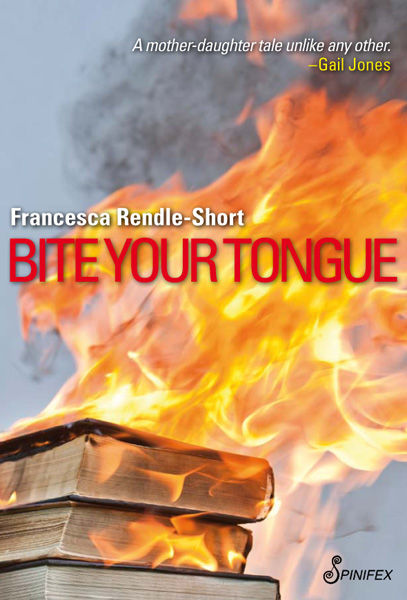
And no doubt I'll read some YA titles, including the forthcoming:
- Queen of the Night, by Leanne Hall
- The Howling Boy, by Cath Crowley
- Pulchritude (or whatever it ends up being called) by Fiona Wood.
Tuesday, December 13, 2011
Happily ever after
On a recent school visit, the teachers asked me to talk a bit about book reviews. Good timing, because I've been thinking a lot lately about the way the reviewing world has changed with so many peer-to-peer recommendation sites and a gazillion book blogs.
I love book blogs: this started out as one, in a way, many years ago. There are reviewers on blogs who are so perceptive about books, they astonish me; some who write beautifully; others who may do so one day, or who write perfectly good thoughtful pieces; others who write as fans - especially in genre - and unashamedly so.
Good on 'em all, I say.
Sites such as Good Reads, Library Thing and inside a dog* make it possible for all of us to share our thoughts on books we've read as, increasingly, do online library catalogues and book stores.
There are dangers, sure, and the occasional scandal, but the more the merrier.
Communities of book lovers, talking about books. What could possibly go wrong?
Well, nothing much, really.
But there is one thing I've noticed over and over again in discussions about books on Good Reads and facebook and various blogs: people really hate it when the book doesn't turn out how they expect. It makes them furious.
They equate this with failure - the plot doesn't unfold the way they imagined therefore the book sucks. And they will often take it out on the author, either through reviews, or more directly in a chat or forum, in a tone that can make your hair curl right up and slide off your head.
I've never been in that position myself but I hate to think what it does to an author.
Let's take a famous example: the death of the beloved Dumbledore at the end of Harry Potter and the Half-Blood Prince.

The world was shocked. The death of "a major character" had been foreshadowed by JK Rowling prior to the book's release and it was even in all the media, but Dumbledore's death led to an outcry. Readers believed he wasn't really dead, and would reappear like Gandalf (of course he does, but he's still dead). As was usual in the Potterverse, complex theories were developed to explain it, dead or alive, and the discussion continues to this day.
But Rowling as the author was always quite clear, and why wouldn't she be? Apart from the fact that it's her book world and she can do whatever she likes, there were myriad plot twists wrapped around the death and, most critical, Harry's character development and quest (and Hermione's too) required it.
That's not how many fans saw it: they saw it as a betrayal, as a failure of the logic they had established for themselves, as a mistake.
They have invested so much in the story - what a wonderful thing! But what else is going on there? We all love to have a theory about what will happen next. Part of the fun of online discussion of books, film and TV is that very element.
I reckon part of it, too, is the expectation that there will be happy endings. That there will be romance, and everyone will live happily ever after.
Sometimes that does happen. In life, and in art. But other things happen too - people disconnect from one another accidentally, or never connect; they argue about stupid things; they annoy you; they get scared when they should be brave; they falter and bicker and fall out of love and die.
I remember well the shriek that went around the cinema when I was a kid watching Doctor Zhivago at the Anglesea Luxury Cinema and Lara DIDN'T TURN AROUND AND OMAR SHARIF WAS RUNNING AND THEN HE CLUTCHED HIS CHEST AND OH MY GOD AND SHE NEVER KNEW!
I nearly spat my Marella Jube into the hair of the person in front.

So if you feel betrayed by an author or a film-maker when that happens in your favourite book or series, don't take it out on them or the work they've created.
What it means is that they have created a world so engaging that we, as readers, are lost in it. We are annoyed because the author wants us to be annoyed, upset because that person we loved is gone and we just don't know what will happen next.
And that's a good thing. Right?
*Disclosure: I work with inside a dog as part of my day job, but these comments are my own.
I love book blogs: this started out as one, in a way, many years ago. There are reviewers on blogs who are so perceptive about books, they astonish me; some who write beautifully; others who may do so one day, or who write perfectly good thoughtful pieces; others who write as fans - especially in genre - and unashamedly so.
Good on 'em all, I say.
Sites such as Good Reads, Library Thing and inside a dog* make it possible for all of us to share our thoughts on books we've read as, increasingly, do online library catalogues and book stores.
There are dangers, sure, and the occasional scandal, but the more the merrier.
Communities of book lovers, talking about books. What could possibly go wrong?
Well, nothing much, really.
But there is one thing I've noticed over and over again in discussions about books on Good Reads and facebook and various blogs: people really hate it when the book doesn't turn out how they expect. It makes them furious.
They equate this with failure - the plot doesn't unfold the way they imagined therefore the book sucks. And they will often take it out on the author, either through reviews, or more directly in a chat or forum, in a tone that can make your hair curl right up and slide off your head.
I've never been in that position myself but I hate to think what it does to an author.
Let's take a famous example: the death of the beloved Dumbledore at the end of Harry Potter and the Half-Blood Prince.

The world was shocked. The death of "a major character" had been foreshadowed by JK Rowling prior to the book's release and it was even in all the media, but Dumbledore's death led to an outcry. Readers believed he wasn't really dead, and would reappear like Gandalf (of course he does, but he's still dead). As was usual in the Potterverse, complex theories were developed to explain it, dead or alive, and the discussion continues to this day.
But Rowling as the author was always quite clear, and why wouldn't she be? Apart from the fact that it's her book world and she can do whatever she likes, there were myriad plot twists wrapped around the death and, most critical, Harry's character development and quest (and Hermione's too) required it.
That's not how many fans saw it: they saw it as a betrayal, as a failure of the logic they had established for themselves, as a mistake.
They have invested so much in the story - what a wonderful thing! But what else is going on there? We all love to have a theory about what will happen next. Part of the fun of online discussion of books, film and TV is that very element.
I reckon part of it, too, is the expectation that there will be happy endings. That there will be romance, and everyone will live happily ever after.
Sometimes that does happen. In life, and in art. But other things happen too - people disconnect from one another accidentally, or never connect; they argue about stupid things; they annoy you; they get scared when they should be brave; they falter and bicker and fall out of love and die.
I remember well the shriek that went around the cinema when I was a kid watching Doctor Zhivago at the Anglesea Luxury Cinema and Lara DIDN'T TURN AROUND AND OMAR SHARIF WAS RUNNING AND THEN HE CLUTCHED HIS CHEST AND OH MY GOD AND SHE NEVER KNEW!
I nearly spat my Marella Jube into the hair of the person in front.

So if you feel betrayed by an author or a film-maker when that happens in your favourite book or series, don't take it out on them or the work they've created.
What it means is that they have created a world so engaging that we, as readers, are lost in it. We are annoyed because the author wants us to be annoyed, upset because that person we loved is gone and we just don't know what will happen next.
And that's a good thing. Right?
*Disclosure: I work with inside a dog as part of my day job, but these comments are my own.
Friday, December 09, 2011
We will fight them in the bookshops
 | ||||||||||||||
| Boy reading 'A History of London' - bombed bookshop during the Blitz (via The Atlantic) |
Tips for new authors: school visits
This morning I'm off to read my one and only (so far) picture book to a kindergarten class.
I love talking to the littlies. They ask such wonderful questions:

I love talking to the littlies. They ask such wonderful questions:
- What's your favourite colour?
- Do you have a dog? Why not?
- Did you write Thomas the Tank Engine? Why not?
- Are you married? Why not?
- I went to the beach once.
- Why is the sky?
Ever so easy to answer.
It got me thinking about what makes a great school or bookshop visit; for the author and especially for the kids. I can still remember the day Ivan Southall came to my primary school. That's the day I decided I wanted to be a writer.
Now, I'm no big expert, but if you're just starting out, maybe this practical list will help - it includes things I've watched others do and need to work on too:
Before
- If you're going to read from your book, practice reading out loud, at home, and slower than you think possible.
- Ask the teachers if there's anything specific they want you to cover - any topics being discussed in class, or queries about your own work or process?
- Ask yourself why you're doing it. If the answer is that your publisher wants you to, that might not make for the most gripping speech the crowd has heard. So ask again. What do you want to share? Encourage? What have you got to say? Why did you write the book in the first place? Why do you write books at all? Why would anybody read them?
- Make sure you are agreed and clear on all details: where, when, what year level, payment (if any), tech requirements.
- It's work. A professional appointment. Dress respectfully.
- Pose yourself a few sample questions (eg, someone will always ask: 'where do you get your ideas?' so your reply to this impossible question would be...?)
- Allow time to get lost on the way or stuck in traffic, arrive, find the right room, cool down/warm up.
- Take a bottle of water.
The big talk
- Say thanks for having me - it's an honour and a privilege to have readers, and you have the opportunity to tell them so.
- Start with confidence, even if you don't feel it. You are the ultimate authority on your own books. Shine.
- Make sure everyone can hear you.
- Move around a bit, if you can. You don't need to pace the stage, but try to present a relaxed body language that invites engagement.
- Slow down. Breathe. Look up. And again.
- Ask them a few age-appropriate questions: favourite books, films, X-Box games, characters - who likes Harry Potter?
- Some of those present have dreamed of becoming a writer or illustrator one day - target a few comments at them.
- Remember: one of them may be the next you, and this may be the day they decide what they want to be when they grow up.
- It's OK to ask people to sshh, but if they are getting a bit too ratty (hot day, hard wooden floor, long talk) get them to stand up and have a stretch or play a little game.
- Take note of the room - feel what's happening as you speak, and adjust your tone and pace as best you can.
- Look around you, make sure you appear to be making eye contact with people all around the room. And actually do it.
- Don't go overtime. It's kinda selfish. If there's no clock, ask someone to warn you when you have three minutes left, and then wrap up fast.
- End with a bang - even if it's just a big thank you, a call to action as simple as "Keep on reading", and a round of applause.
- Enjoy yourself. Yes, really.

Powerpoint
- Don't use it if you're not utterly comfortable with it - or coping without it if there's a technical hitch.
- Powerpoint is great to give structure, present images and embed video. Handy for people who are visual. That's all. Don't rely on it.
- You don't need to put everything on the slides. Images, maybe a few bullet points - not your whole talk.
- Try not to look at the big screen, or even at the monitor or laptop - know the slides so well that you don't even have to look. It's your story. Just tell it.
- Take the concept of each slide as the jump-off point for that bit of your talk, then have a chat about that concept. What you say should be different to the points on the slide - don't read the words out loud.
Q&A
- Repeat audience questions or incorporate them into your answer, in case nobody heard it.
- Ask people their names when you select them to ask a question and say hello.
- If it's a complicated or hard question, ask the group if they have any ideas or experience of it - on some issues, more than one perspective is handy.
Afterwards
If you can, take something along you can leave with the bookseller, teacher or librarian - it might be a poster you can sign, or some bookmarks for them to give out later. That will help the kids remember your name and your book title after you've gone. Offer to sign the library's or bookshop's copies of your books.
Be happy if kids want you to sign books, posters, arms - anything. Ask them questions about themselves as you sign, check how they spell their names if there's nobody there to help you.

Be happy if kids want you to sign books, posters, arms - anything. Ask them questions about themselves as you sign, check how they spell their names if there's nobody there to help you.

Over the years, I've watched world-famous authors (who shall remain nameless) at festivals and events not bothering to engage with kids at all, grizzling about signing their own books, gossiping with their publicists while kids are clamouring to ask them questions, blanking staff members, or getting volunteers up on stage and then humiliating them in front of the whole group. You don't want to be that person - no matter how famous or rich they are, they probably won't get invited back.
On the other hand, I've watched amazing writers like Margaret Mahy, Antony Browne and Jacqueline Wilson (and closer to home the likes of Andy Griffith, Richard Newsome and Sally Rippin) really engage warmly with a group of kids, then do it all over again - just as genuinely - an hour later.
On the other hand, I've watched amazing writers like Margaret Mahy, Antony Browne and Jacqueline Wilson (and closer to home the likes of Andy Griffith, Richard Newsome and Sally Rippin) really engage warmly with a group of kids, then do it all over again - just as genuinely - an hour later.
You may not be a big name. You may be shy. You may feel nervous. You might not be the person who cracks jokes and works the room like a US President.
But you might be the person who changes someone's life.
But you might be the person who changes someone's life.
Subscribe to:
Posts (Atom)